Why Small Businesses Still Fail at Forecasting

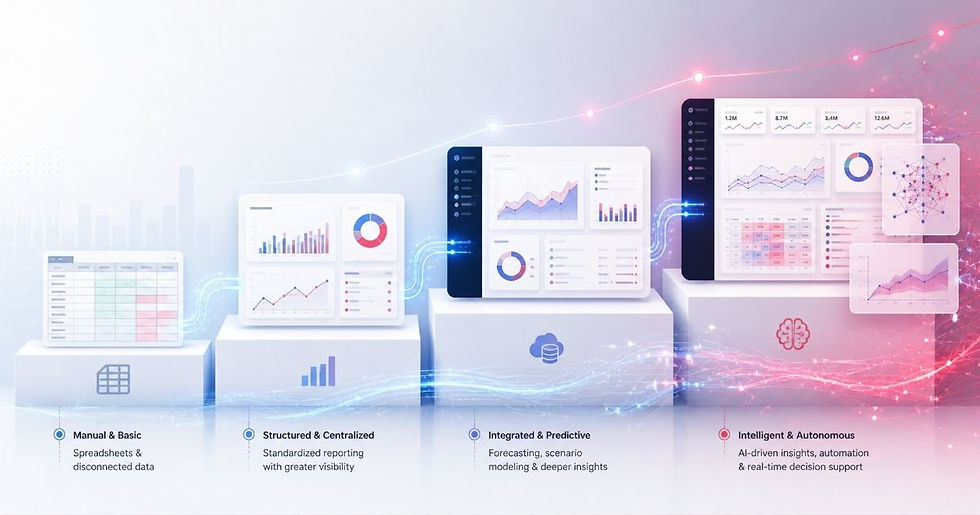
Small business forecasting often fails because it is treated as a static, spreadsheet-based exercise rather than a continuous decision-making process. Many small businesses rely on outdated assumptions, manual models, and limited scenario planning, which makes forecasts unreliable as conditions change. Without regular updates, driver-based analysis, and clear cash flow visibility, forecasting for small businesses becomes reactive, leaving leaders unprepared for revenue shifts, cost volatility, and growth decisions.
Small business forecasting should be a competitive advantage. It’s the mechanism that helps leaders anticipate cash needs, plan hiring, manage growth, and survive uncertainty. Yet for many small businesses, forecasting remains unreliable, reactive, or ignored altogether. A study found that 82% of businesses fail because they can’t manage their cash flow effectively, and just 40% of owners report feeling confident in their financial knowledge.
The issue isn’t a lack of effort. Most small business leaders do forecast, often diligently. The problem lies in how forecasting is conducted, what it’s based on, and when it’s updated. As a result, forecasts frequently fail to reflect reality, leaving businesses exposed just when they need clarity most.
Below, we break down why forecasting for small businesses continues to fall short, the most common mistakes teams make, and how companies can finally build forecasts that inform decisions instead of explaining surprises.
Forecasting Is Treated as a Static Exercise
One of the biggest forecasting problems in small businesses is that forecasting is often treated as a one-time task rather than a living process. Many companies create a forecast at the start of the year, file it away, and only revisit it when something goes wrong.
This approach breaks down quickly. Customer demand shifts. Costs fluctuate. Payment cycles change. When forecasts aren’t refreshed regularly, they stop being predictive and become historical explanations disguised as plans.
Effective small business forecasting requires frequent updates and a willingness to revisit assumptions, not just numbers.
Small Business Forecasting Mistakes That Keep Repeating
Relying Too Heavily on Spreadsheets
Spreadsheets are familiar, flexible, and accessible, which is exactly why small businesses rely on them. But they’re also fragile. Manual inputs, broken formulas, version confusion, and inconsistent assumptions all undermine forecast accuracy over time.
As data sources grow (banking, payroll, CRM, subscriptions), manual spreadsheet forecasting becomes less sustainable. The model may still “work,” but confidence in the output erodes, and leaders begin making decisions based on instinct instead of insight.
Confusing Budgets With Forecasts
Another common mistake is treating budgets and forecasts as the same thing. Budgets are fixed targets. Forecasts are dynamic estimates. When businesses use a static budget as their forecast, they lose the ability to adapt as conditions change.
This leads to delayed responses like cost cuts that come too late, missed hiring windows, or cash shortfalls that could have been anticipated months earlier.
Why Forecasting for Small Businesses Breaks Under Pressure
Overconfidence in Historical Trends
Many small business forecasts assume the future will closely resemble the past. While historical data is useful, it’s not a guarantee, especially for growing or seasonal businesses.
Customer behavior, pricing pressure, supply costs, and payment terms can change quickly. Forecasts built purely on historical averages often miss these inflection points, creating a false sense of security.
Lack of Scenario Thinking
Small businesses often forecast a single “expected” outcome. But real-world performance rarely follows one clean path. Without scenarios (best case, worst case, and likely case), leaders are forced to react instead of prepare.
Scenario planning doesn’t require complex models. It requires acknowledging uncertainty and building flexibility into the forecasting process.
The Human Factor
Forecasting failures aren’t only technical, they’re behavioral. Many small business owners avoid revisiting forecasts because the numbers feel uncomfortable or discouraging. Others update forecasts selectively to align with expectations rather than reality.
This creates optimism bias, where forecasts reflect hope more than evidence. Over time, teams stop trusting the forecast entirely, defeating its purpose. A useful forecast isn’t about being optimistic or pessimistic but about being honest.
How to Improve Small Business Forecasting
Make Forecasting Continuous, Not Annual
Forecasts should be reviewed monthly or even weekly for cash flow. This doesn’t mean rebuilding models from scratch. It means adjusting assumptions as new information becomes available.
Shorter feedback loops lead to better decisions and fewer surprises.
Focus on Drivers, Not Just Totals
Revenue and expense totals don’t explain why performance changes. Driver-based forecasting (focusing on customer volume, pricing, churn, payroll headcount, or payment timing) helps small businesses understand what’s actually moving the numbers.
When drivers change, the forecast changes with them.
Improve Data Consistency Before Adding Complexity
Before investing in advanced tools, businesses should ensure their core data is consistent and reliable. Clean categorization, clear definitions, and aligned assumptions matter more than sophisticated models.
Better inputs always beat more formulas.
What Forecasting Should Really Do
At its best, small business forecasting is not about predicting the future perfectly. It’s about reducing uncertainty enough to make informed decisions.
A strong forecast helps answer practical questions:
Can we afford to hire next quarter?
How long will our cash last under different scenarios?
What happens if revenue slows or accelerates?
When forecasting provides clarity on these questions, it becomes a strategic asset instead of a reporting chore.
Forecasting Fails When It’s Treated as a Checkbox
Small businesses don’t fail at forecasting because they lack intelligence or effort. They fail because forecasting is often static, spreadsheet-bound, and disconnected from real decision-making.
By shifting forecasting into a continuous, driver-based, and scenario-aware process, small businesses can turn forecasting into what it was always meant to be: a tool for navigating uncertainty, not explaining it after the fact.
Improving small business forecasting doesn’t require perfection. It requires discipline, honesty, and a willingness to let the numbers inform the next move, before it’s too late.